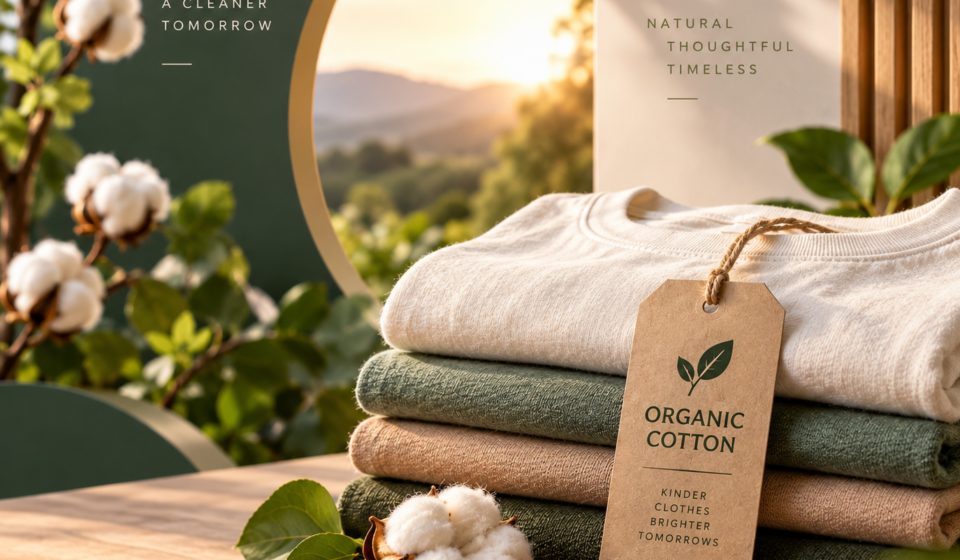

Choosing 100% organic cotton clothing is one of the simplest upgrades you can make to a wardrobe, and one of the easiest to get wrong. The word “organic” appears on hang tags everywhere now, but the gap between a garment made entirely from certified organic fibre and one containing a token percentage is enormous — in how it’s grown, how it’s processed, how it feels, and how long it lasts.
This guide covers what the label genuinely promises, which certifications hold up to scrutiny, how to identify greenwashing before you pay for it, and how to care for organic cotton so the investment pays off.
What 100% organic cotton clothing actually means
Organic cotton is grown from non-GMO seed without synthetic pesticides, herbicides, or chemical fertilisers. Growers rely on crop rotation, composting, beneficial insects, and mechanical weeding. The soil is treated as a living system rather than an inert medium held together by chemical inputs.
When a garment is sold as 100% organic cotton clothing, the fibre content should be entirely certified organic cotton — no polyester blended in for stretch, no conventional cotton quietly padding out the yarn.
What that claim does not cover, on its own, is processing. Cotton passes through ginning, spinning, knitting or weaving, bleaching, dyeing, and finishing before it becomes a shirt. Every one of those stages can reintroduce harsh chemistry unless the manufacturer is bound to a standard covering the entire supply chain. This is why certification matters far more than the wording on the label, and why serious organic cotton clothing brands publish their credentials rather than gesturing at them.
The certifications worth trusting
Most claims are unverified. These are the marks that carry real weight:
GOTS (Global Organic Textile Standard) is the strictest and most recognised standard in textiles. A product labelled “organic” under GOTS must contain at least 95% certified organic fibres; “made with organic materials” requires a minimum of 70%. GOTS also governs processing — restricting toxic dyes and finishes, mandating wastewater treatment, and setting social criteria for wages and working conditions. If you learn one certification, learn this one.
OCS (Organic Content Standard) verifies organic content and tracks it through the chain of custody. OCS 100 indicates 95–100% organic content; OCS Blended covers 5% and above. It confirms fibre content but does not regulate chemical processing or labour conditions the way GOTS does.
USDA Organic applies to raw agricultural fibre grown under US organic regulations. It is a farming standard, not a textile standard.
OEKO-TEX Standard 100 tests finished fabric for harmful substances. It says nothing about how the cotton was grown, but it confirms the garment against your skin has been screened for chemical residues — a useful companion to organic certification, not a substitute.
Fairtrade covers pricing and conditions for farmers and usually sits alongside organic certification.
The strongest signal is a verifiable GOTS licence number, not a logo dropped onto a product page.
Organic cotton vs conventional cotton
Conventional cotton is among the most chemically intensive crops in commercial agriculture, occupying a modest share of global farmland while consuming a disproportionate share of insecticides. Those inputs reach farm workers first, then local water systems, then soil structure over successive seasons.
Organic systems remove synthetic inputs from that equation. The soil outcomes are well documented: more organic matter, better water retention, more resilient microbial life.
Water is more nuanced than marketing usually admits. The dramatic savings figures repeated online vary enormously by region and irrigation method, and much organic cotton is rain-fed rather than irrigated — which explains a large part of the difference. The honest summary: organic farming reliably reduces chemical load, and reduces water impact substantially in many growing regions, though not universally.
Yields per hectare are typically lower, which is one reason 100% organic cotton clothing costs more. Certification fees, smaller production runs, and higher payments at every supply chain stage account for the rest.
Why organic cotton feels different to wear
There’s a practical case here, separate from the environmental one.
Fibre grown without aggressive chemical inputs is often hand-picked or harvested with less mechanical stress, preserving a longer, less brittle staple. Longer staples spin into smoother, stronger yarn. Add gentler finishing — no chlorine bleaching, no formaldehyde-based wrinkle treatments — and you get fabric that is softer from the first wear and holds structure through repeated washing.
This is exactly why premium labels build their eco-luxury essentials around certified organic cotton rather than treating it as an entry-level option. The material performs.
For anyone with reactive skin or eczema, and for parents buying baby clothing, reduced chemical residue is the primary draw. Fewer finishing agents means fewer irritants sitting against skin for hours at a time.
How to spot greenwashing
Reliable red flags:
- “Made with organic cotton” is not 100% organic. It can mean 70%, or far less if the brand holds no certification at all.
- Vague language with no numbers. “Eco-conscious cotton,” “natural fibres,” and “responsibly sourced” have no legal definition.
- Logos without licence numbers. Genuine GOTS holders have a licence verifiable in the public GOTS database.
- Earthy branding doing the heavy lifting. Kraft packaging and leaf iconography are design decisions, not credentials.
- No supply chain detail anywhere. Brands that paid for certified production talk about it, because it was expensive and they want the credit.
One question settles it: can I verify this independently? If not, treat it as copy.
Caring for organic cotton so it lasts
The sustainability argument collapses if a garment is worn ten times and binned. Organic cotton rewards slightly better care:
- Wash cold. Hot water breaks down fibres and accelerates fading.
- Wash less often. Spot-clean and air out between wears.
- Skip fabric softener. It coats fibres and reduces absorbency — a splash of white vinegar does the same job without residue.
- Line dry where possible. Tumble drying is the leading cause of shrinkage and pilling in cotton knits.
- Fold heavy knits rather than hanging them, so shoulders don’t stretch.
Treated this way, a well-made organic cotton tee outlasts three or four fast-fashion equivalents — which is where the price gap quietly closes.
Is 100% organic cotton clothing worth the premium?
On unit price, no. On cost per wear, almost always yes.
The stronger argument sits behind the garment rather than in it. Each certified purchase shifts demand toward farms not saturating soil and groundwater with synthetic chemistry, and toward mills held to verified labour standards. It’s a slow lever, but a real one.
Start where it matters most: the pieces closest to your skin and worn most frequently — t-shirts, underwear, bedding, children’s clothing. Buying certified staples during a seasonal promotion is a sensible way to build the base of a wardrobe without absorbing the full premium at once.
Buy fewer pieces, verify the certification, and wear them for years. That combination does more for you and for the supply chain than any claim printed on a hang tag.